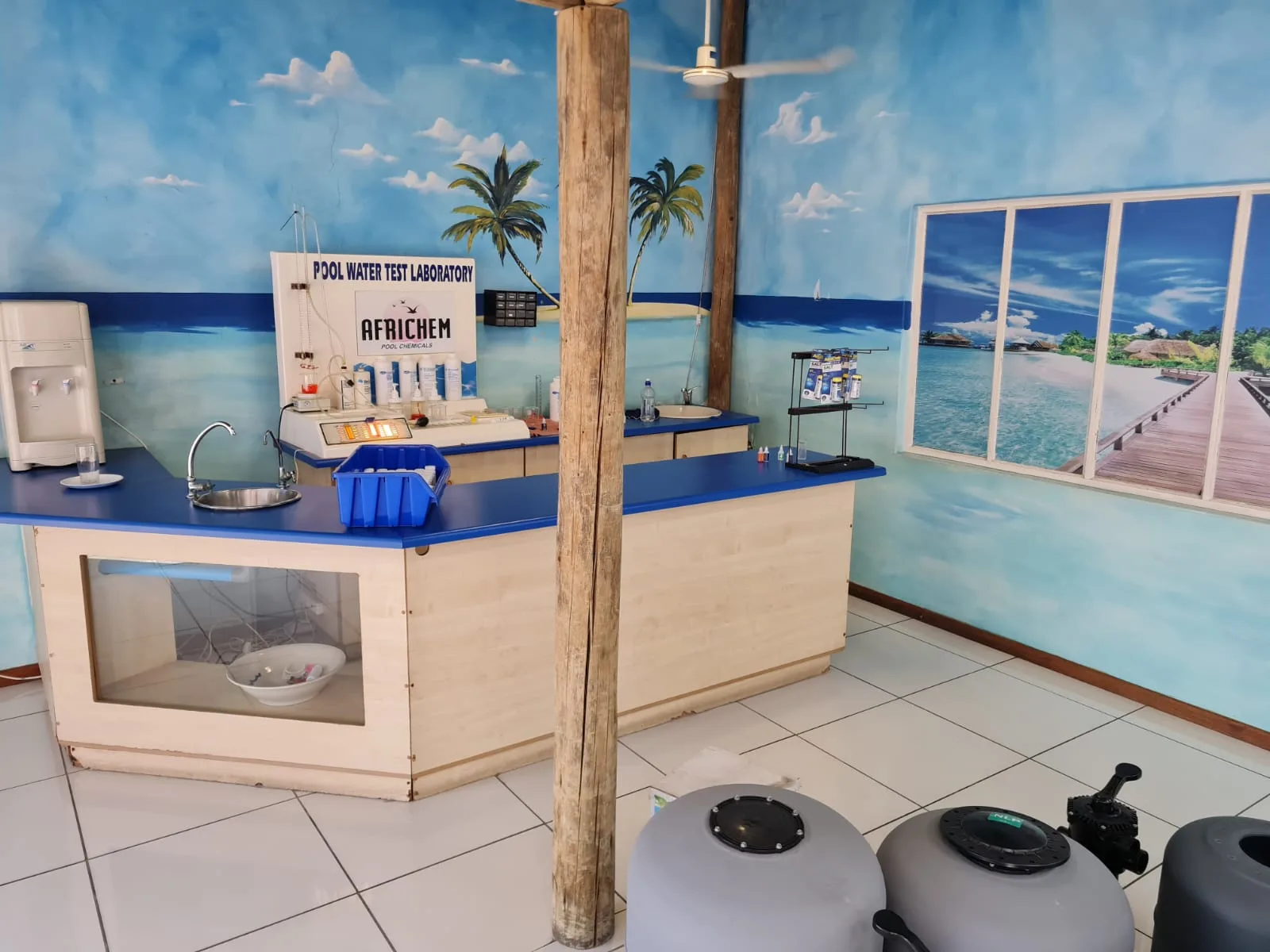
How to Test Your Pool Water
Testing your pool water is the single most important thing you can do as a pool owner. Not brushing. Not vacuuming. Not running the pump longer. Testing. Because without knowing what's actually in the water, every chemical you add is a guess. And guessing is how you end up with green water, damaged equipment, or a pool that eats through chlorine like it's nothing.
Why Test Pool Water?
Pool water looks the same whether the pH is 6.8 or 7.8. You can't see alkalinity. You can't taste stabiliser levels. By the time you can see a problem (cloudiness, green tinge, foam), the chemistry has been off for days or weeks. Testing catches imbalances early, before they become expensive fixes.
Regular testing also saves you money. When you know exactly what your pool needs, you buy exactly the right product in exactly the right amount. No more dumping in "a scoop of chlorine and hope for the best."
What to Test For
There are five key parameters. Here's what each one does and what the ideal range should be:
1. pH (Ideal: 7.2 - 7.6)
pH measures how acidic or alkaline your water is. It's the most important reading because it affects everything else. At a pH of 7.2, chlorine is about 65% effective as a sanitiser. At 8.0, that drops to around 20%. So you could have plenty of chlorine in the pool and still get algae, simply because the pH is too high for it to work.
Low pH (below 7.0) is corrosive. It eats at metal fittings, heat exchangers, and pool surfaces. It also irritates eyes and skin. High pH (above 7.8) makes water cloudy, causes scale buildup, and renders your chlorine useless. The sweet spot is 7.4, right in the middle.
2. Free Chlorine (Ideal: 1 - 3 ppm)
Free chlorine is the chlorine that's actually available to kill bacteria and algae. It's different from total chlorine, which includes combined chlorine (chloramines). You want free chlorine between 1-3 ppm. Below 1 ppm and you're not sanitising properly. Above 5 ppm and it gets uncomfortable for swimmers.
If your test shows high total chlorine but low free chlorine, you have a chloramine problem. The fix is a shock treatment: a large dose of chlorine (usually 10x the normal amount) that breaks apart the combined chlorine. This is also what eliminates the strong "chlorine smell" that people associate with over-chlorinated pools. That smell is actually under-chlorinated water.
3. Total Alkalinity (Ideal: 80 - 120 ppm)
Alkalinity is pH's bodyguard. It buffers the water so that pH doesn't swing wildly every time it rains or someone adds a chemical. Low alkalinity means your pH bounces around constantly. You add acid, pH drops too far. You add soda ash, pH spikes. It's a never-ending cycle. Get alkalinity right first, and pH becomes much easier to manage.
To raise alkalinity, add sodium bicarbonate (bicarb). To lower it, add hydrochloric acid (pool acid) in small doses and retest after 6 hours.
4. Cyanuric Acid / Stabiliser (Ideal: 30 - 50 ppm)
Stabiliser protects chlorine from UV breakdown. Without it, direct South African sun can destroy 90% of your free chlorine within two hours. With the correct stabiliser level, that same chlorine lasts the whole day.
The catch: stabiliser accumulates. It doesn't evaporate or break down. Every time you add stabilised chlorine (like trichlor tablets), you're adding more CYA. Once it climbs above 80-100 ppm, it actually locks up your chlorine and prevents it from working. This is called "chlorine lock." The only way to reduce CYA is to drain some water and refill with fresh. This is one of the most common issues we see at the counter, pool owners frustrated that their chlorine "isn't working" when the real culprit is sky-high stabiliser.
5. Calcium Hardness (Ideal: 200 - 400 ppm)
Calcium hardness measures the dissolved calcium in your water. Too little and the water is "aggressive." It will pull calcium from wherever it can find it: your plaster, grouting, and concrete surfaces. Over time, this etches and roughens your pool finish. Too much calcium and you get scale, that white crusty deposit on tiles, fittings, and inside pipes.
Gauteng water tends to be relatively soft (low calcium). Lowveld water varies. Test it, and add calcium chloride if you're below 200 ppm.
Bring a water sample to either branch
We test it on the spot for free. Our professional testing is more accurate than home kits and covers all five parameters plus extras like phosphates, copper, and iron. No appointment needed, just walk in with a sample. If your pool hasn't cleared up after a few days, bring another sample and we'll retest and adjust. Follow-up testing is part of the service.
WhatsApp UsTest Strips vs Liquid Test Kits
There are two main ways to test pool water at home: dip strips and liquid reagent kits. Both work, but they're different tools for different needs.
Test Strips
- Fast. Dip, wait 15 seconds, compare colours.
- Tests pH, free chlorine, alkalinity, and sometimes stabiliser in one strip.
- Good for quick weekly checks.
- Less precise. Colour matching is subjective, especially in low light.
- Affected by moisture. Keep the container sealed and dry.
- Cost: R150-R300 for a bottle of 50 strips.
Liquid Test Kits (DPD/Phenol Red)
- More accurate. You count drops until the colour changes, giving a precise reading.
- The standard 4-in-1 kit tests pH, free chlorine, total chlorine, and alkalinity.
- Better for diagnosing problems when something is off.
- Slower. Takes 2-3 minutes per test.
- Reagents expire. Replace them at the start of each season.
- Cost: R250-R500 for a quality kit.
Our recommendation: use test strips for your weekly routine check. Keep a liquid kit for when readings look unusual and you need more accuracy. And bring a sample in to us once a month for a comprehensive professional test. It's free, and it catches things home kits can't measure.
How to Take a Proper Water Sample
Where and how you take the sample matters. A bad sample gives bad results.
- Use a clean container. Rinse it with pool water first. No soap residue, no dust, no leftover chemicals.
- Sample from elbow depth. About 30cm below the surface, away from return jets and the skimmer. Surface water is not representative of the full pool.
- Test within an hour. Chemical levels change as the sample sits. If you're bringing it in to us, keep it out of direct sunlight and get it to us the same day.
- Don't test right after adding chemicals. Wait at least 4 hours (ideally overnight) after dosing before testing. You need the chemicals to circulate and dissolve fully.
- Don't test right after rain. Heavy rain dilutes the pool surface. Wait for the pump to circulate for a few hours, then test.
What to Add When Levels Are Off
Here's a quick reference for the most common adjustments:
| Problem | Solution |
|---|---|
| pH too high | Add hydrochloric acid (pool acid). Small doses, retest after 6 hours. |
| pH too low | Add soda ash (sodium carbonate). |
| Chlorine too low | Add granular chlorine or liquid chlorine. Dissolve granules in a bucket first. |
| Alkalinity too low | Add sodium bicarbonate (bicarb). 1.5kg per 10,000 litres raises TA by about 10 ppm. |
| Alkalinity too high | Add hydrochloric acid in small doses. This also lowers pH, so monitor both. |
| Stabiliser too low | Add cyanuric acid (pool stabiliser). Dissolve in warm water, pour around edges. |
| Stabiliser too high | Partial drain and refill. There is no chemical that removes CYA. |
| Calcium too low | Add calcium chloride. Dissolve first, never throw directly into the pool. |
One important thing to understand: pool chemistry is iterative. A single test and treatment doesn't always resolve the issue, especially if your water has been neglected or multiple parameters are off at once. Correcting one imbalance can shift another. If your pool hasn't cleared within 48-72 hours after treatment, bring another sample in. The second test often reveals a secondary imbalance that wasn't obvious until the first one was addressed. This is normal, not a sign that something went wrong.
How Often Should You Test?
- pH and chlorine: 2-3 times per week in summer. Once a week in winter.
- Total alkalinity: Once a week.
- Stabiliser (CYA): Once a month, or after heavy rain or a large top-up.
- Calcium hardness: Once a month.
- Professional test at Ridd's: Once a month, or whenever something looks off and you can't figure out why.
Why Professional Testing Is More Accurate
Home test kits are useful for routine checks, but they have limits. Test strips fade with age and exposure to moisture. Liquid reagents expire and lose accuracy. Colour-matching in different lighting conditions introduces error.
Our in-store testing uses professional testing equipment that goes well beyond what home kits can do. The readings are precise and consistent. We also test for parameters most home kits don't cover: phosphates (which feed algae), copper (which stains surfaces), iron, and total dissolved solids. When we test your water, we print out a full report and walk you through exactly what to add, in what order, and how much. No guesswork.
Bring in about 500ml from elbow depth. Both our Roodepoort and Nelspruit branches offer free testing. Walk in any time during trading hours. No appointment. No obligation.
 Free PDF
 Free Pool Care Guide
Get the full pool care guide with ideal chemical ranges, dosing instructions, and printable test result charts. Free PDF.
- Weekly maintenance checklists
- Chemical dosing charts with ideal ranges
- Seasonal opening and closing prep
- Common mistakes that cost you money
We respect your privacy and comply with POPIA. Unsubscribe anytime.
Related Articles
Salt Chlorinator vs Chlorine: Which Is Right for Your Pool?
Read MorePool Maintenance 101: The Complete Guide for SA Pool Owners
Read MoreNeed pool chemicals?
Browse our full range of pool chemicals or book a maintenance visit and let us handle the dosing.
Your Pool. Sorted.
Whether you need chemicals for a green pool, a new pump, regular maintenance, or advice from someone who has seen it all before. The Trollip family still runs Ridd's. Decades of pool expertise. Two branches. Free water testing. Everything but the water.
Walk in. Call. WhatsApp. We're here.
Ridd's Pool Care App
Track your pool health, service history & water chemistry from your phone.