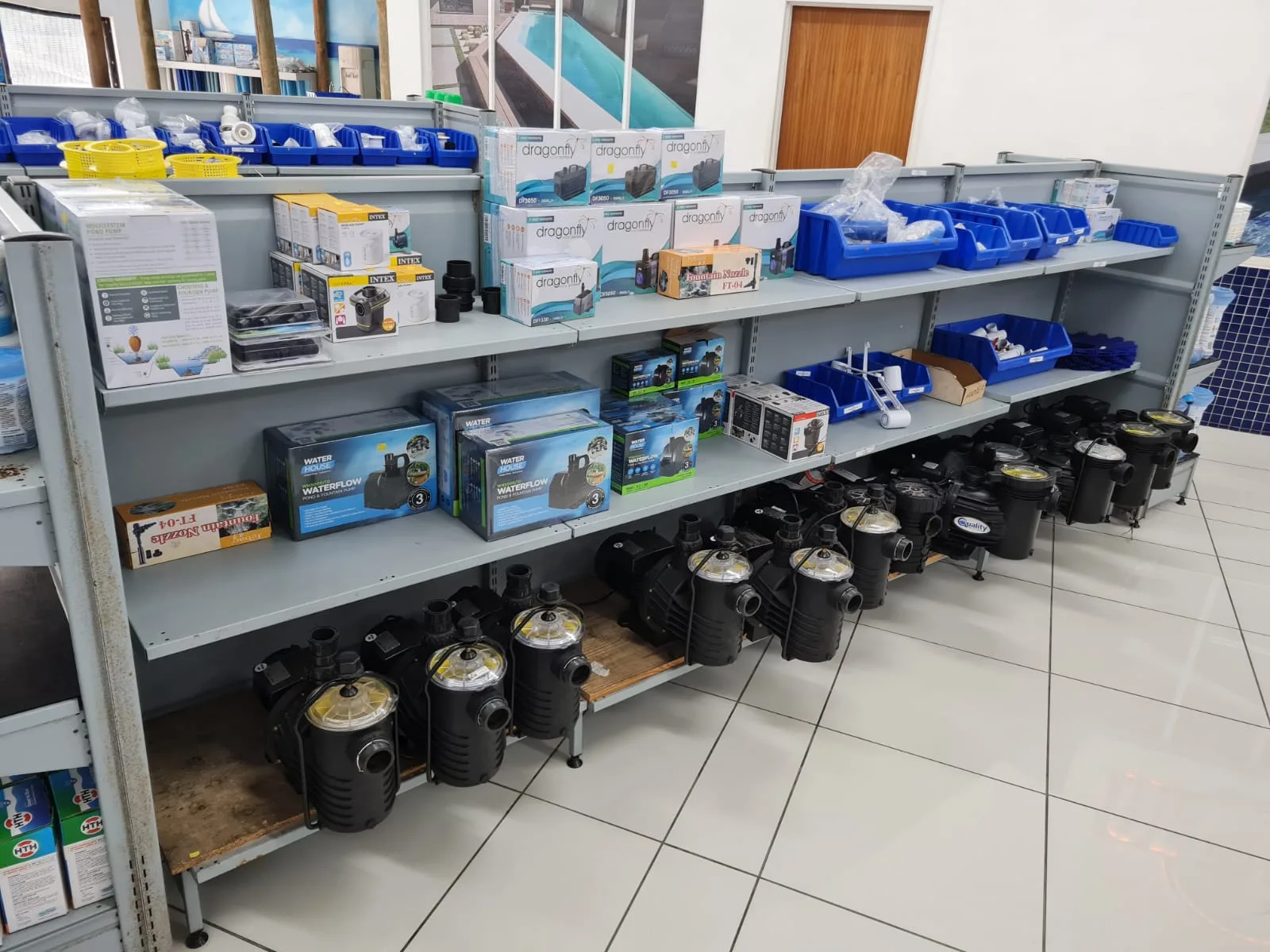
Pool Pump Sizing Guide
A pool pump that's too small won't circulate and filter the water properly. A pump that's too big wastes electricity, creates excessive backpressure on the plumbing, and can damage the filter. Getting the right size matters, both for water quality and for your electricity bill. This guide walks you through the calculation so you can buy with confidence.
Step 1: Calculate Your Pool Volume
Everything starts with knowing how many litres your pool holds. If you don't know, use these formulas. All measurements in metres.
Rectangular Pool
Length x Width x Average Depth x 1,000 = Volume in litres
Average depth = (shallow end + deep end) / 2. For example, a pool that's 10m x 5m with a shallow end of 1.0m and a deep end of 2.0m: Average depth = 1.5m. Volume = 10 x 5 x 1.5 x 1,000 = 75,000 litres.
Round Pool
Diameter x Diameter x Average Depth x 785 = Volume in litres
A round pool with a 6m diameter and 1.4m depth: 6 x 6 x 1.4 x 785 = 39,564 litres. Call it 40,000 litres.
Kidney / Freeform Pool
(Widest width + Narrowest width) / 2 x Length x Average Depth x 1,000 = Volume in litres. This gives a reasonable estimate. For an accurate reading, bring your pool dimensions in to us and we'll calculate it.
Step 2: Understand Turnover Rate
Turnover rate is how long it takes for your pump to circulate the entire volume of your pool through the filter. The industry standard for residential pools is one full turnover every 6-8 hours. In South African summers, especially on the Highveld where afternoon storms dump debris and warm temperatures accelerate algae growth, aim for 6 hours.
The formula: Pool Volume (litres) / Turnover Time (hours) / 60 = Required Flow Rate (litres per minute).
Example: 50,000 litres / 6 hours / 60 = 139 litres per minute. Your pump needs to push at least 139 litres per minute to achieve a 6-hour turnover.
Step 3: Match Pump Size to Flow Rate
Pool pump performance is rated in kW (motor power) and litres per minute (flow rate). The flow rate on the label is the maximum output with zero resistance. In reality, your plumbing, filter, and pipe length create resistance (called "head"), so the actual flow is lower. A good rule of thumb: expect 60-70% of the rated maximum flow in a typical residential installation.
Here's a sizing table based on common South African pool sizes, assuming a 6-hour turnover and standard residential plumbing:
| Pool Volume | Required Flow | Recommended Pump | Price Range |
|---|---|---|---|
| 20,000 litres | 56 L/min | 0.45 kW | R3,500 - R5,500 |
| 30,000 litres | 83 L/min | 0.55 - 0.75 kW | R4,500 - R7,000 |
| 40,000 litres | 111 L/min | 0.75 kW | R5,000 - R8,000 |
| 50,000 litres | 139 L/min | 0.75 - 1.1 kW | R6,000 - R10,000 |
| 60,000 litres | 167 L/min | 1.1 kW | R7,500 - R12,000 |
| 80,000 litres | 222 L/min | 1.5 kW | R9,000 - R15,000 |
| 100,000+ litres | 278+ L/min | 1.5 - 2.2 kW | R12,000 - R20,000 |
These are guidelines. If your pump is far from the pool, or the plumbing has many bends, or you're running a solar heating system or water features in addition to the filter, you may need to go one size up. If in doubt, bring your pool dimensions and a photo of your current setup to us and we'll recommend the right pump.
Variable Speed vs Single Speed Pumps
This is where the conversation gets interesting, especially with Eskom tariffs where they are.
Single Speed Pumps
- Run at one speed: full power. All the time.
- Lower upfront cost. A quality 0.75 kW single speed pump runs R5,000-R8,000.
- Simple. No electronics, no programming.
- Higher running cost. A 0.75 kW pump running 8 hours per day at R2.50/kWh costs roughly R450/month in electricity.
Variable Speed Pumps
- Run at adjustable speeds. Low speed for daily filtration, high speed for backwashing or vacuuming.
- Higher upfront cost. Expect R12,000-R25,000 depending on brand and size.
- Dramatically lower running cost. At low speed, a variable speed pump uses 60-80% less electricity than a single speed pump doing the same filtration job.
- Quieter at low speed. Your neighbours will notice the difference.
- Longer lifespan. Running at lower RPM reduces wear on bearings and seals.
The Electricity Calculation
South African electricity costs are a real factor. Here's a comparison for a typical 50,000-litre pool:
| Factor | Single Speed (0.75 kW) | Variable Speed (0.75 kW rated) |
|---|---|---|
| Daily run time | 8 hours at full speed | 12 hours at low speed |
| Average draw | 0.75 kW | 0.18 - 0.25 kW |
| Daily kWh | 6.0 kWh | 2.2 - 3.0 kWh |
| Monthly cost (at R2.50/kWh) | R450/month | R165 - R225/month |
| Annual cost | R5,400/year | R1,980 - R2,700/year |
| Annual saving | - | R2,700 - R3,420/year |
The variable speed pump pays for itself in 3-4 years through electricity savings alone. With Eskom tariffs increasing year on year, that payback period keeps getting shorter. If you're replacing a pump anyway, the variable speed option is worth serious consideration.
Another advantage: variable speed pumps can run during off-peak hours at low speed. Some municipalities offer time-of-use tariffs where electricity is cheaper at night and early morning. Programming the pump to do most of its work during off-peak hours reduces your cost even further.
Brands We Stock
We carry Kreepy Krauly, Quality, and Pentair pumps across a range of sizes. Both single speed and variable speed options. All pumps we sell come with manufacturer warranties and we can help with installation advice. If you're unsure about compatibility with your existing plumbing and filter, bring in a photo or the details and we'll match it.
Not sure which pump you need?
Send us your pool dimensions on WhatsApp and we'll calculate the right pump size for you. Or walk into either branch with your current pump model number and we'll find the correct replacement.
WhatsApp UsCommon Mistakes When Choosing a Pump
- Buying too big. A 1.5 kW pump on a 30,000-litre pool is overkill. It wastes electricity, creates unnecessary pressure on the filter and plumbing, and shortens the filter's lifespan. Bigger is not better.
- Ignoring head loss. If your pump is 15 metres from the pool, or the plumbing has sharp 90-degree bends, you need to account for the friction loss. The pump needs more power to push water through a longer, more complex pipe run.
- Matching by pipe size alone. "My pipes are 50mm so I need a pump with a 50mm connection." The pipe size tells you nothing about the required flow rate. Always calculate from pool volume and turnover time.
- Buying the cheapest option. A R2,500 no-name pump might save you upfront, but it often fails within 12-18 months. A quality pump from a known brand lasts 5-8 years with proper maintenance. The cheap pump costs you more in replacements and downtime.
- Not matching the pump to the filter. The pump and filter need to be compatible. A pump that's too powerful for the filter creates excessive pressure, shortens filter media life, and can push dirty water back into the pool. Check that the filter's rated flow matches the pump's output.
When to Replace Your Pump
Pool pumps don't last forever. Signs it's time for a replacement:
- Loud screeching or grinding noise (bearing failure).
- Leaking from the shaft seal that keeps recurring after replacement.
- Tripping the electrical breaker repeatedly.
- Noticeably weaker flow despite clean baskets and filter.
- The motor is more than 8-10 years old and drawing more power than its rating.
- Rust or corrosion on the motor housing.
If the motor housing is sound and it's just the bearings, a motor repair can extend its life for another few years at a fraction of full replacement cost. We can advise whether a repair or replacement makes more sense based on the pump's condition and age.
 Free PDF
 Free Pool Care Guide
Get our complete pool care guide with equipment maintenance tips, chemical dosing charts, and seasonal checklists. Free PDF.
- Weekly maintenance checklists
- Chemical dosing charts with ideal ranges
- Seasonal opening and closing prep
- Common mistakes that cost you money
We respect your privacy and comply with POPIA. Unsubscribe anytime.
Related Articles
Pool Maintenance 101: The Complete Guide for SA Pool Owners
Read MoreSalt Chlorinator vs Chlorine: Which Is Right for Your Pool?
Read MoreBrowse pool pumps
View our full range of pool pumps from Kreepy Krauly, Quality, and Pentair. Single speed and variable speed options in stock at both branches.
Your Pool. Sorted.
Whether you need chemicals for a green pool, a new pump, regular maintenance, or advice from someone who has seen it all before. The Trollip family still runs Ridd's. Decades of pool expertise. Two branches. Free water testing. Everything but the water.
Walk in. Call. WhatsApp. We're here.
Ridd's Pool Care App
Track your pool health, service history & water chemistry from your phone.