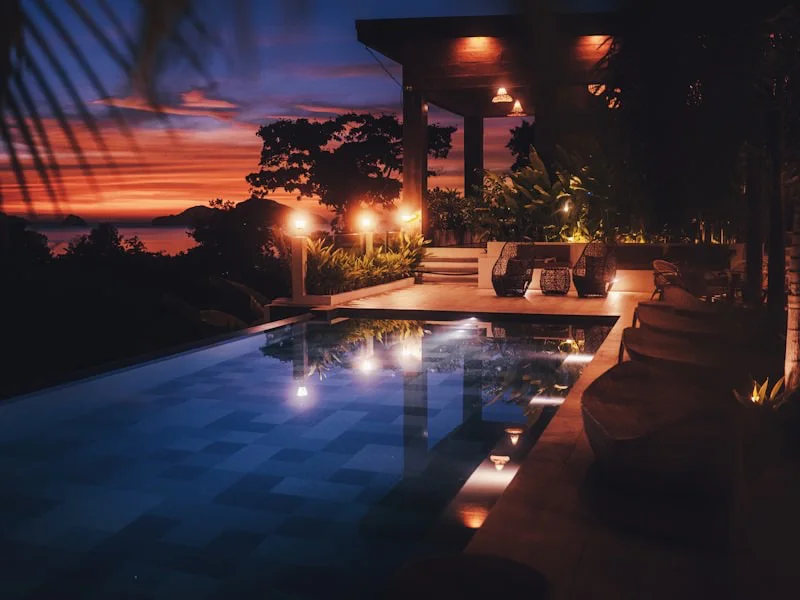
Pool Safety Covers vs Nets
If you have a pool and children in the house (yours or anyone else's), a safety barrier is not optional. South African law requires it. Every year, drowning claims the lives of children in residential pools that lacked adequate protection. A safety cover or safety net is one of the most effective barriers you can install, and both options comply with SANS 10134 when properly fitted.
The question is which one. Covers and nets solve the same problem in different ways, and the right choice depends on your pool shape, budget, how often you swim, and what secondary benefits matter to you.
What SANS 10134 Requires
SANS 10134 is the South African national standard for the safety of swimming pool operations. It requires that all residential pools have a safety barrier to prevent unsupervised access by children. Acceptable barriers include fencing with self-closing gates, safety covers, safety nets, or a combination.
For a cover or net to comply, it must:
- Support the weight of a child (at least 30kg) without allowing them to reach the water.
- Be secured to the pool surround with anchors or fasteners that a child cannot open.
- Have no gaps larger than 100mm at any point around the perimeter when installed.
- Be installed by a competent person or according to manufacturer specifications.
Both safety covers and safety nets can meet these requirements. The key word is "when properly installed." A cover or net that's loosely draped over the pool, not anchored, or has gaps around the edges does not comply and does not protect.
Safety Covers
A pool safety cover is a solid or reinforced PVC sheet that stretches across the pool and anchors to flush-mounted brass fittings drilled into the pool surround. When tensioned, it creates a taut surface that prevents access to the water. Most safety covers are custom-made to the exact shape and dimensions of your pool.
Advantages of Safety Covers
- Keeps debris out. Leaves, dust, insects, and rain dirt stay on top of the cover instead of in the water. This reduces chemical consumption and cleaning time significantly.
- Reduces evaporation. In Gauteng's dry winters, an uncovered pool can lose 3-5mm of water per day to evaporation. A cover cuts this by 90% or more, saving water and reducing your need to top up and rebalance chemicals.
- Retains heat. The cover acts as a thermal blanket, keeping heat in the water. This is especially useful if you have a solar or heat pump heating system, as it stops overnight heat loss.
- Clean appearance. When on, the pool looks tidy. No floating leaves or green tinge visible.
- Solar options. Some covers are translucent and allow sunlight to heat the water while blocking debris. These combine the benefits of a solar blanket with safety compliance.
Disadvantages of Safety Covers
- Higher cost. A quality safety cover for a standard pool (8m x 4m) typically costs R15,000-R35,000 depending on material and manufacturer. Larger or irregular pools cost more.
- Slower to put on and take off. It takes 5-10 minutes to remove or replace a cover. If you swim daily, this gets tedious. Some pool owners stop using the cover because it's inconvenient, which defeats the purpose.
- Rainwater pooling. After heavy rain, water collects on the cover surface. This water needs to be pumped off before you can remove the cover, otherwise it dumps dirty water into the pool.
- UV degradation. The South African sun is harsh on PVC. Even UV-stabilised covers degrade over time, becoming brittle and losing tensile strength. Expect to replace a cover every 5-8 years, depending on quality and UV exposure.
Safety Nets
A pool safety net is a mesh of high-strength polypropylene or nylon cord that stretches across the pool and anchors to flush-mounted fittings in the pool surround. The mesh prevents a child from falling through while allowing water, rain, and sunlight to pass through freely.
Advantages of Safety Nets
- Lower cost. A safety net for a standard pool (8m x 4m) typically costs R8,000-R18,000. Significantly cheaper than a cover.
- Quick to put on and take off. Most nets can be spread and anchored in 2-3 minutes. Removal is equally fast. This makes them practical for daily swimmers.
- No rainwater pooling. Water drains through the mesh, so there's no need to pump off standing water after a storm.
- Longer lifespan. Quality nets last 8-12 years. The mesh is resistant to UV and doesn't degrade as quickly as solid PVC. The cord is thinner and less affected by the sun.
- Lightweight. Easy to fold, store, and handle. One person can manage a net on a standard-size pool.
Disadvantages of Safety Nets
- Does not keep debris out. Leaves, dust, and insects pass through the mesh and into the water. You still need to skim and vacuum regularly.
- No evaporation reduction. The water surface is exposed to air and sun. Evaporation and chemical loss continue as normal.
- No heat retention. A net does nothing to keep the water warm. If heating the pool matters to you, a net is not a substitute for a thermal cover.
- Appearance. A net over the pool is functional, not decorative. Some homeowners prefer the clean look of a solid cover.
Cost Comparison
| Factor | Safety Cover | Safety Net |
|---|---|---|
| Purchase price (8m x 4m pool) | R15,000 - R35,000 | R8,000 - R18,000 |
| Installation (anchors) | R2,000 - R4,000 | R1,500 - R3,000 |
| Lifespan | 5 - 8 years | 8 - 12 years |
| Cost per year (average) | R3,000 - R5,000/year | R1,000 - R2,000/year |
| Chemical savings | Significant (less debris, less evaporation) | Minimal |
| Water savings | Significant (reduced evaporation) | None |
When you factor in the chemical and water savings a cover provides, the effective cost difference between the two narrows. But the net still wins on pure purchase price, and for many families, the lower upfront cost is the deciding factor.
Which One Should You Choose?
There's no single right answer. It depends on your priorities.
- Choose a cover if: You want to keep the pool clean when not in use, reduce chemical and water costs, retain heat, and you don't swim every day. Covers are the better choice for holiday homes, rental properties, and pools in areas with heavy tree cover.
- Choose a net if: You swim frequently and want something quick to put on and take off, budget is a primary concern, or your pool has an unusual shape that makes a custom cover prohibitively expensive. Nets are also better for homes where multiple family members need to be able to quickly remove and replace the barrier.
- Consider both: Some pool owners use a safety net as their primary daily barrier and a thermal/solar cover on top during winter when swimming is less frequent. This gives you safety compliance year-round plus the thermal and debris benefits during the off-season.
Need help choosing?
Send us your pool dimensions and a photo on WhatsApp. We'll recommend the right option and give you a quote. We supply and can arrange installation of both safety covers and safety nets at competitive prices.
WhatsApp UsInstallation and Maintenance Tips
- Professional installation. Both covers and nets rely on flush-mounted anchors drilled into the pool surround. These need to be positioned correctly and at the right tension. Poor installation creates gaps that a child can slip through. Always use a professional installer or follow the manufacturer's specifications exactly.
- Check anchor integrity annually. Brass anchors can loosen over time, especially in paving that shifts. Give each anchor a firm tug at the start of each season.
- Clean covers regularly. Hose the cover down to remove dust and debris before folding. This prevents the dirt from scratching and abrading the material.
- Inspect net cord for fraying. Check the cord where it loops through the anchors. This is where wear concentrates. Replace the net if you see fraying, UV whitening, or loss of elasticity.
- Store properly. When not in use for extended periods, store covers and nets in a cool, shaded area. UV exposure during storage accelerates degradation.
 Free PDF
 Free Pool Care Guide
Get our complete pool care guide with equipment maintenance tips, safety checklists, and seasonal prep lists. Free PDF.
- Weekly maintenance checklists
- Chemical dosing charts with ideal ranges
- Seasonal opening and closing prep
- Common mistakes that cost you money
We respect your privacy and comply with POPIA. Unsubscribe anytime.
Related Articles
Winterizing Your Pool in South Africa
Read MorePool Maintenance 101: The Complete Guide for SA Pool Owners
Read MoreBrowse pool covers
View our range of pool covers including safety covers, thermal covers, and solar blankets. Available at both our Roodepoort and Nelspruit branches.
Your Pool. Sorted.
Whether you need chemicals for a green pool, a new pump, regular maintenance, or advice from someone who has seen it all before. The Trollip family still runs Ridd's. Decades of pool expertise. Two branches. Free water testing. Everything but the water.
Walk in. Call. WhatsApp. We're here.
Ridd's Pool Care App
Track your pool health, service history & water chemistry from your phone.